

Is Video the New Language?
A reflection on the endangered languages, the algorithm, identity loss

Welcome back to Of The Moment! This has probably been one of the most impactful weeks I've had all year. As someone who prides themselves on being spontaneous and a bit unpredictable, I finally decided to stay consistent with something I've been struggling with for the longest time. Being seen. My friends and fellow creatives who chronically live behind the scenes promised each other that we would post every single day for 75 days on Instagram.
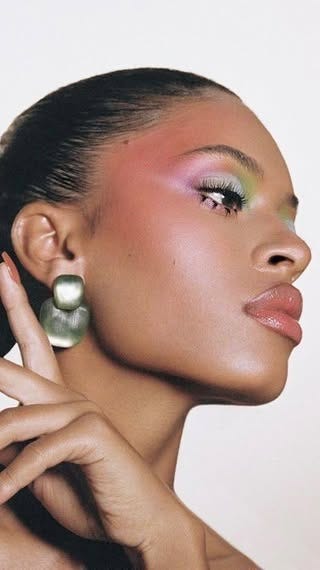
Through this content challenge, I've been learning so much about myself and what I actually want to share with this world. I love posting about beauty, but there are so many other topics I want to talk about. While my professional career has mostly been in the beauty industry and creator economy, I’ve found myself missing the work I once dreamed of doing. In university, I majored in international relations with a focus on conflict resolution, specifically studying the genocide in South Sudan. My classes were filled with emotional conversations about the current state of the world, and each one left me thinking I wanted to be this generation's Amal Clooney.

However, the more I studied and worked for government and non-governmental organizations, the more questions arose that I couldn't answer. As individuals, can we really make an impact that sways government decisions? Are some humanitarian efforts actually modern forms of colonization? All these questions felt heavy and my intuition told me that a new chapter needed to begin.
What I’ve come to realize is that my strength might lie more in amplifying stories rather than navigating bureaucracy on the ground. I care deeply about injustice, and I know I can use the algorithm to elevate voices and narratives that deserve to be seen. Of The Moment will continue exploring beauty trends, but I’m expanding the lens to include cultural changes that shape both the creator economy and our shared human experience. I fully recognize the privilege of being able to step back and observe from a distance. I’m so grateful for the opportunity to reflect and to help share the stories of those who don’t have that same choice.
With that reintroduction out of the way, let’s explore a new language that, some say, is the language of the future.
“Bro I lost my accent”
This week, I came across a video where an Australian woman says, "I would never lose my Australian accent," while discussing how another Australian creator has lost his and how she "feels defeated" listening to it. Despite it sounding a bit harsh, people in the comments agree. One user commented, "Bro I lost my accent from watching too much American yt, tiktoks, n Netflix series." The comment had over 3,000 likes and replies from people saying they related.
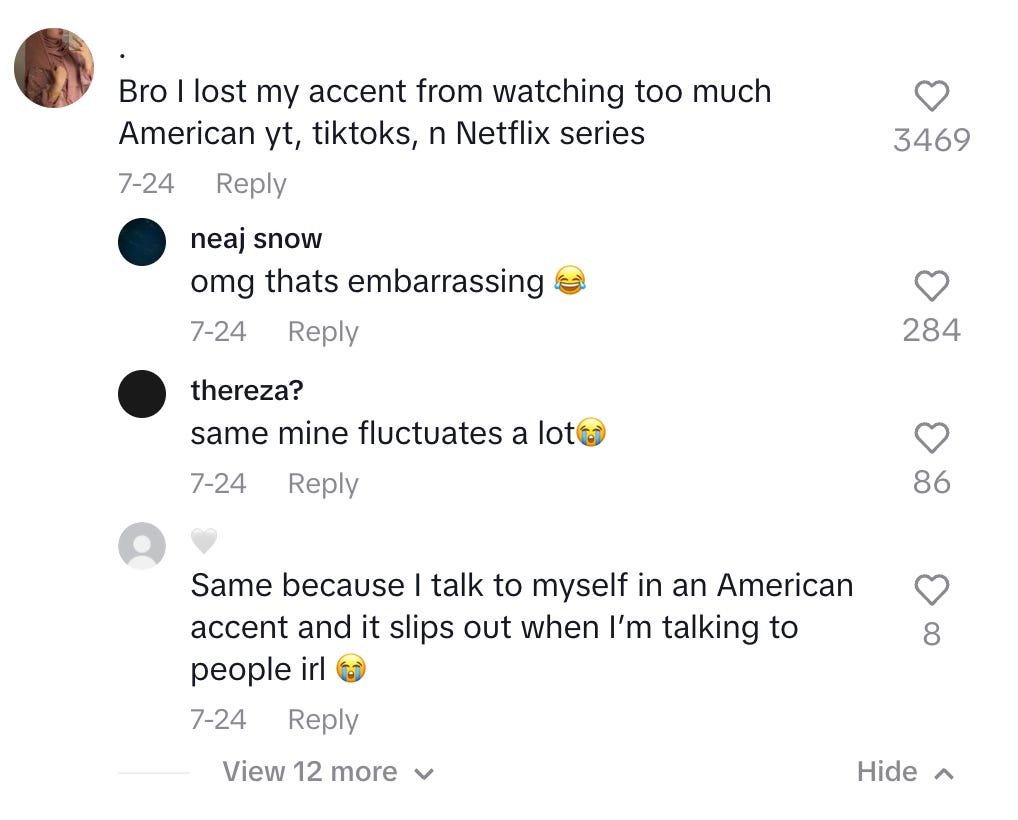
I was honestly surprised this video went viral. I didn’t think many people were paying attention to how quickly accents are shifting. I remember during the Tumblr days, when so many Americans, including me, romanticized packing up and moving to Australia to live the surfer girl dream. Now it feels like that cultural admiration has reversed. With social media platforms saturated in American content, it’s not just accents that are fading. What we’re seeing in Australia is a small glimpse of how American media shapes global culture. So what happens when this influence reaches smaller nations and communities with fewer resources to preserve their own?
A New Language
The only class I loved in high school was human geography. Besides the teacher being hilarious, I still find myself referencing some of the lessons we learned. I specifically remember watching a documentary about how languages die every year. Although I knew that colonization had destroyed languages throughout history, and so many groups are still suffering from the impact of the past, I didn't realize that social media was accelerating this erosion. Based on the most recent data I could find, 3,000 languages are currently endangered.
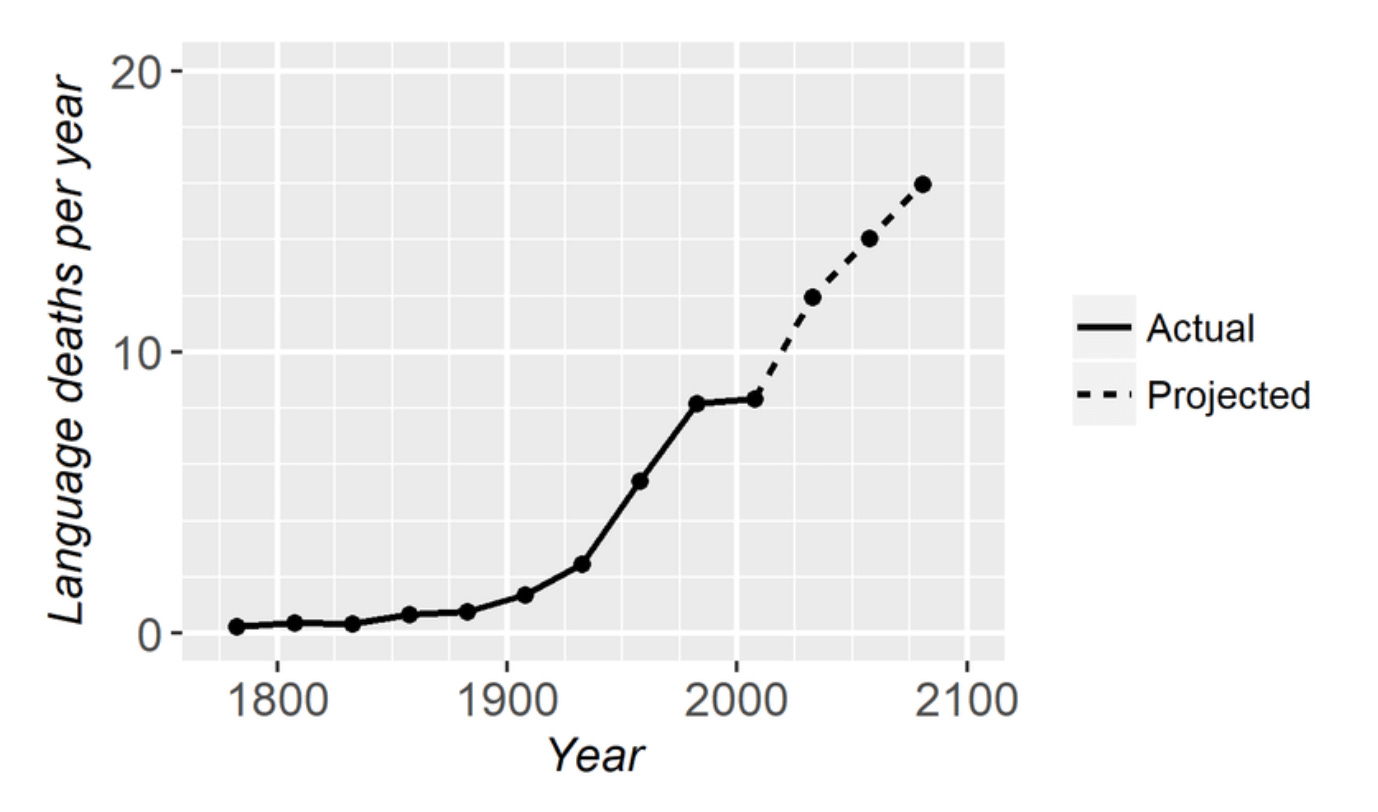
As new technologies are created, especially social media platforms, languages struggle to modernize and adopt terminology that keeps pace with innovation. So many words have become Americanized. For some reason, the fact that "marketing" in English is the same in Portuguese doesn't sit right with me. This extends beyond individual words too. Even global platforms like TikTok, despite being created in China, use English names to ensure worldwide recognition. While some countries have institutions that aim to preserve languages and create new words, the trend continues. According to an article by Gary F. Simons, about nine languages die annually and by 2080, we're expected to reach 16 language deaths per year.
Is Being Seen Being Understood?
With these statistics in the back of my mind, I was driving and listening to my usual podcast when the host, Shaan Puri, said something that I knew I wanted to share with you all.
“I believe that video is the native tongue of the internet. You go to a country and what language do they speak? They speak English. They speak Spanish. They speak Mandarin. The internet speaks video.”
I completely understand how he arrived at that conclusion. He talked about how, not long ago, everyone was encouraged to learn coding because those skills could open doors and change your life.
In the episode, he and his cohost Sam Parr reflected on growing up with computer rooms and how he used to teach his grandfather how to type. Now, with video content being everywhere, anyone who doesn’t understand video editing (they specifically mentioned cinematic video editing) or how to show up online is at risk of becoming the modern version of that grandparent.
 Tiktok failed to load.
Enable 3rd party cookies or use another browser
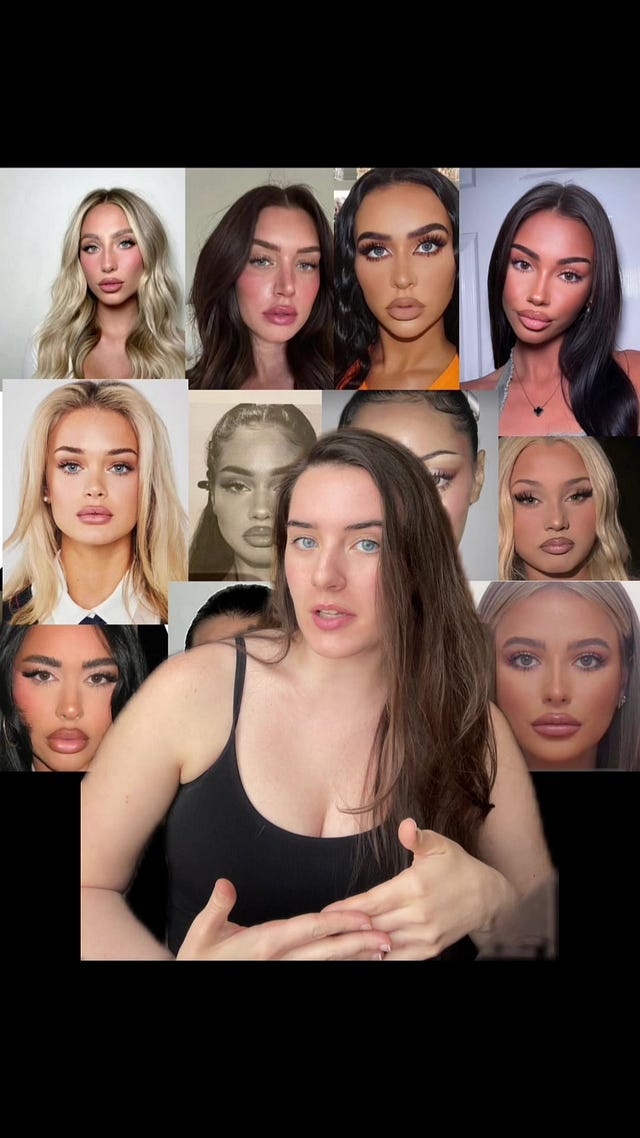
While I love cinematic videos, I can’t help but wonder what it really means when visual communication becomes our primary language. Will we eventually all start speaking the same aesthetic? Will we all begin to look alike, shaped by the same algorithms and ideals? These questions keep growing as more people connect through video and the line between communication and virality starts to blur.
The Unserious Generation’s War
This era of technology honestly makes me feel powerless at times. The constant change feels like a never-ending mind game. Unlike the obvious destruction we saw with colonization, today’s shifts are happening more subtly through screens, algorithms, and the content we consume every day. It may not feel like a forceful takeover, but we’re often drawn into it without realizing what we’re giving up.
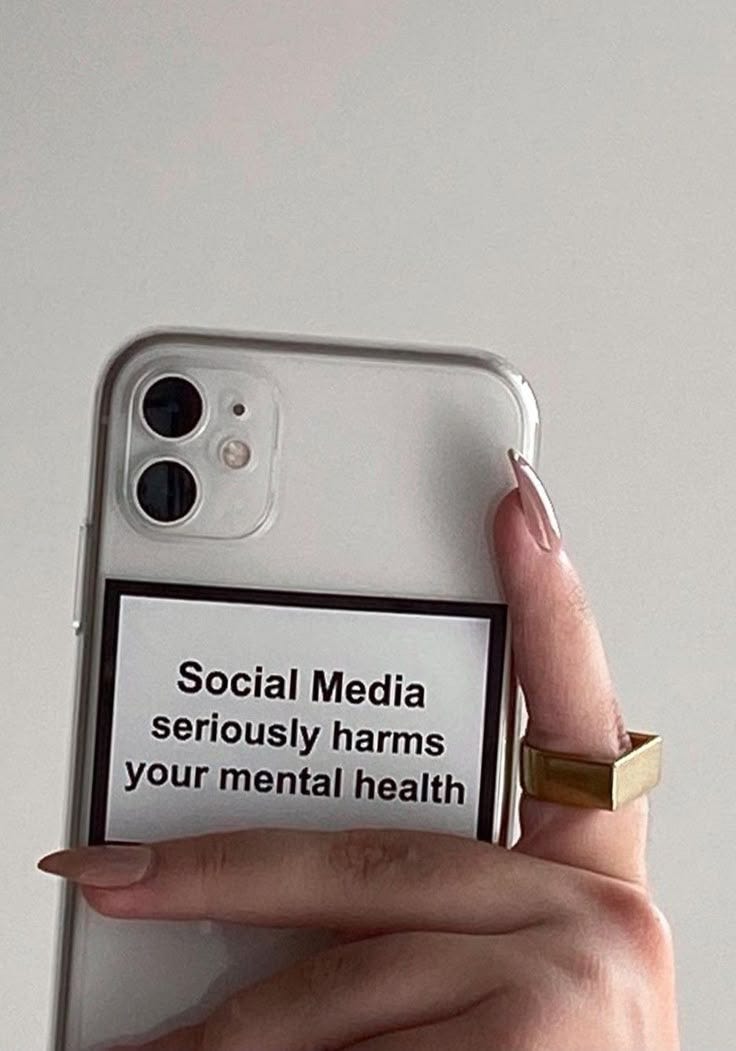
Sometimes I wonder if we’re entering a war with the algorithm. We like to believe we’re curating our feeds with intention, but Big Tech is actively shaping aesthetic standards and communication styles around the world. Even Steven from DOAC mentioned in his interview with the “Godfather of AI” that a close friend of his knows one of the biggest AI tech founders. Behind closed doors, this founder has said he doesn’t care about humanity, even though his public image presents a much more thoughtful and compassionate perspective.
As more launches are announced and app updates downloaded, can we break free from the systems designed to keep us consuming? In most cases, we start by voluntarily engaging with this content, but algorithms are engineered to create dependency. When addiction becomes the outcome, choice disappears entirely. Addiction is a disease, not a decision.
Archive pages on Instagram and pockets of the internet work to preserve cultural moments, but just as people are starting to look the same, how do we prevent ourselves from converging into one global culture? And if that happens, who decides the standards? Will it be Silicon Valley executives? The answer should concern us, but maybe we've become so desensitized to this gradual erasure masked by the unseriousness of most of the content we consume.
The Irony of It All
I fully recognize the irony of writing this on a social media platform. I contribute to these spaces too, and I genuinely enjoy sharing my thoughts online. With all of this in mind, I’ve been thinking a lot about what it means to stay connected to your roots. As a first-gen, I’ve always struggled with questions of identity, but lately I’ve felt a strong pull to go back to Brazil, just to reconnect with my culture in a more grounded way.
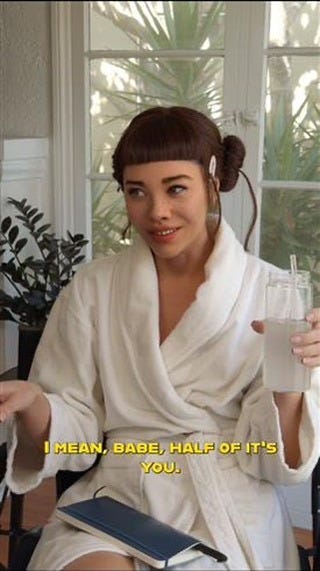
On another note, it’s interesting how tech founders are leaning into Brazilian culture too, even when they have no ties to it beyond the aesthetic. One of the earliest digital influencers, Lil Miquela, is portrayed as Brazilian-American, yet she was created by American founders with no Brazilian heritage. She’s reportedly earning around $10 million a year, all while borrowing from multiple cultures and real people. It’s strange to see how agencies can extract from culture, profit at scale, and still contribute to the rise of parasocial relationships between humans and AI. The whole thing feels off, but it’s happening everywhere. I definitely want to write more about this in depth soon.
So, let’s change things up?
All of this has been sitting with me for so long, and I’ve realized they’re too big to answer alone. I’d love to turn this into a series! Over the next few months, I want to explore the dynamic between digital connection and cultural preservation by interviewing creators, speakers of endangered languages, and people who have chosen to live more offline.
I also want to highlight the communities actively preserving culture, from archival accounts and language learning projects to creators sharing traditional practices through modern tools. Maybe the goal isn’t to choose between cultural authenticity and digital fluency, but to find ways to hold space for both.
If this resonates, I would truly love to hear from you 💌 Whether you’re a creator navigating your identity online, someone working to preserve language and tradition, or just someone who has noticed these shifts in your own life, your story matters. I want this to feel like a hopeful and creative project, not rooted in doom and gloom. I’m so excited to share all the beauty that the algorithm has been hiding. Please share your thoughts in the comments or send a message if this resonates! Can’t wait to figure this out together.
love this so much!